Past Exhibition
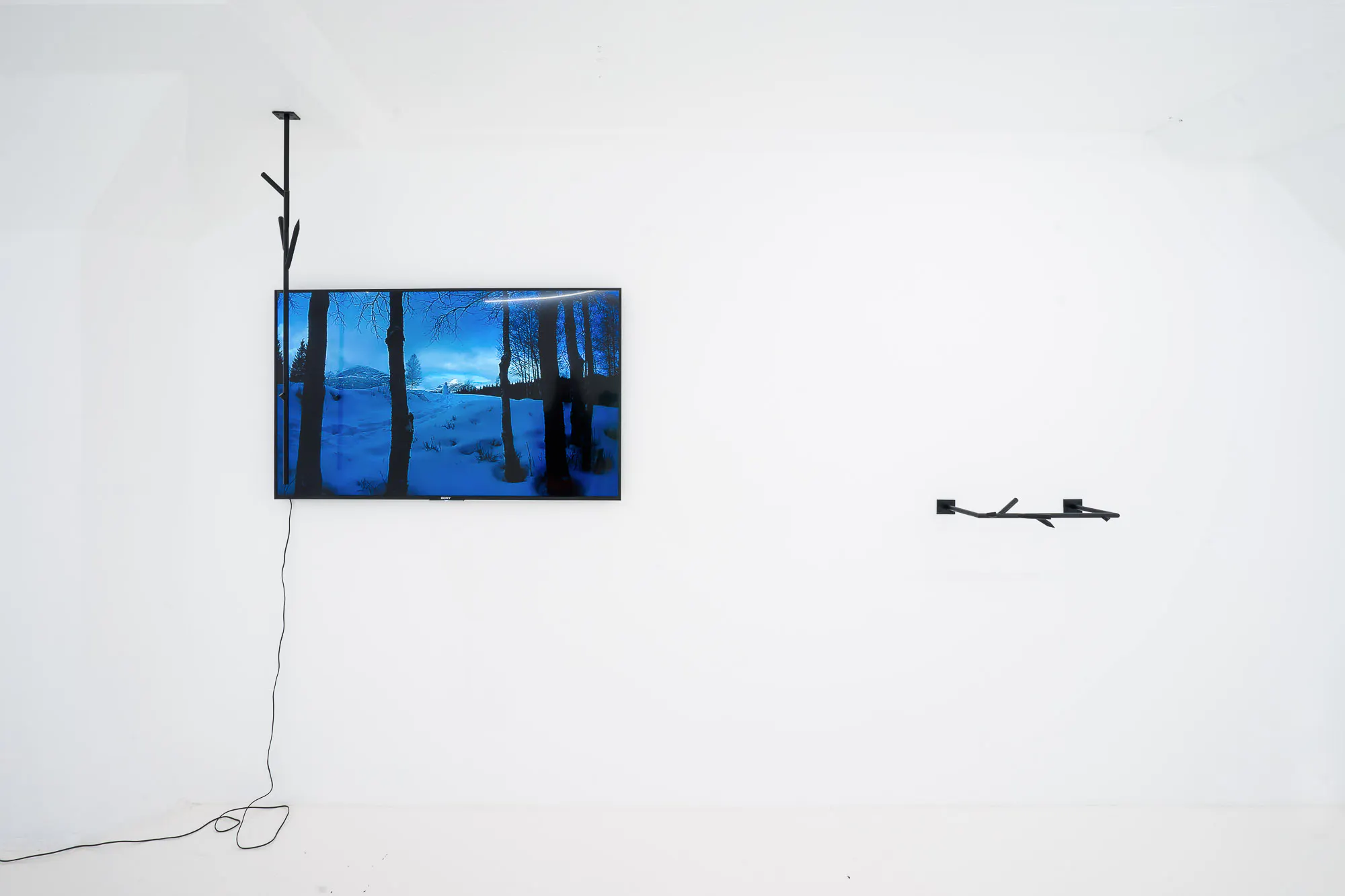
On the use of unknown objects
Scott Rogers, Egle Kulbokaite, Sydney Shen, Katie Bethune-Leamen, Paul Barsch
16/03/19 – 13/04/19
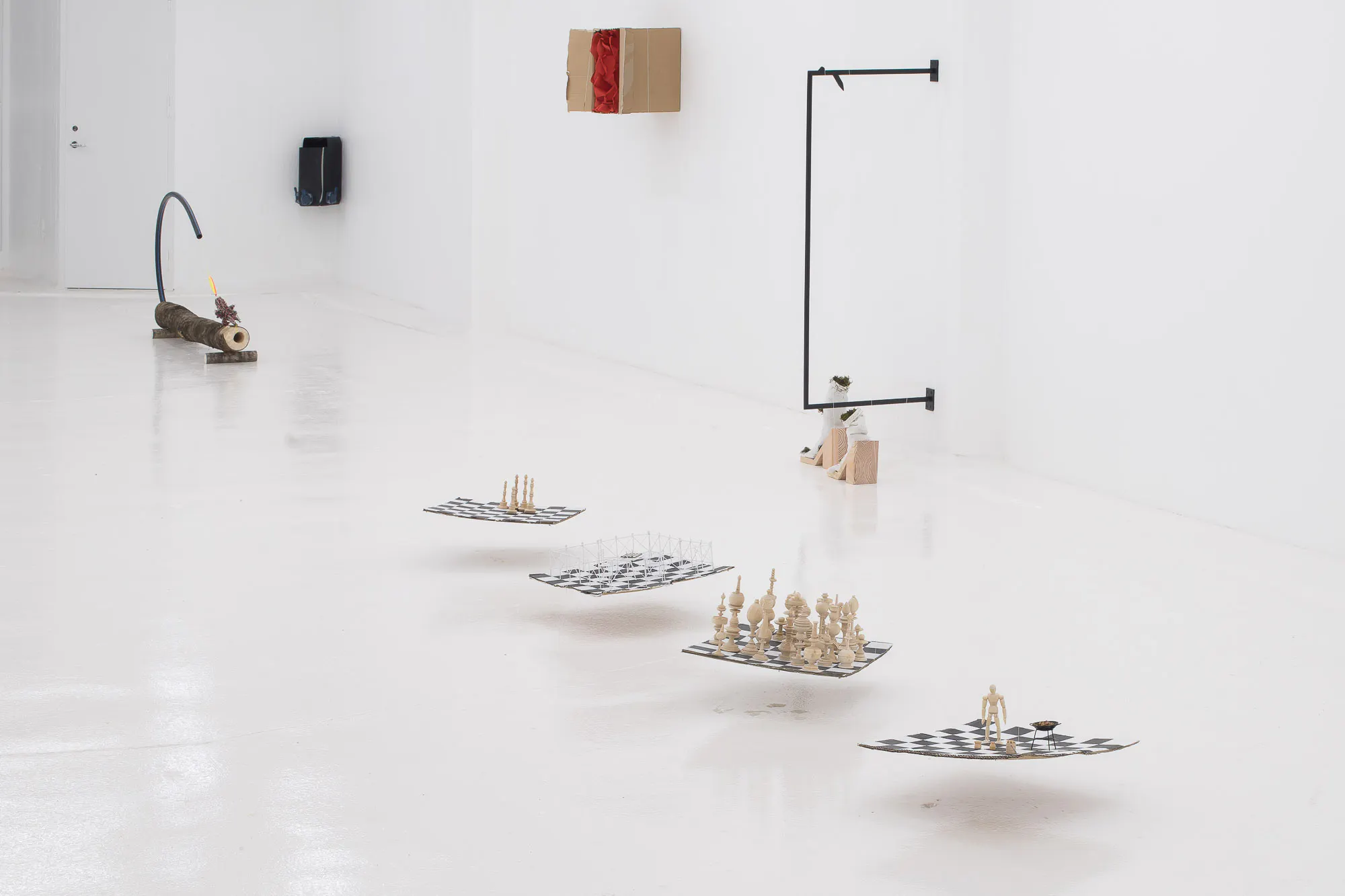
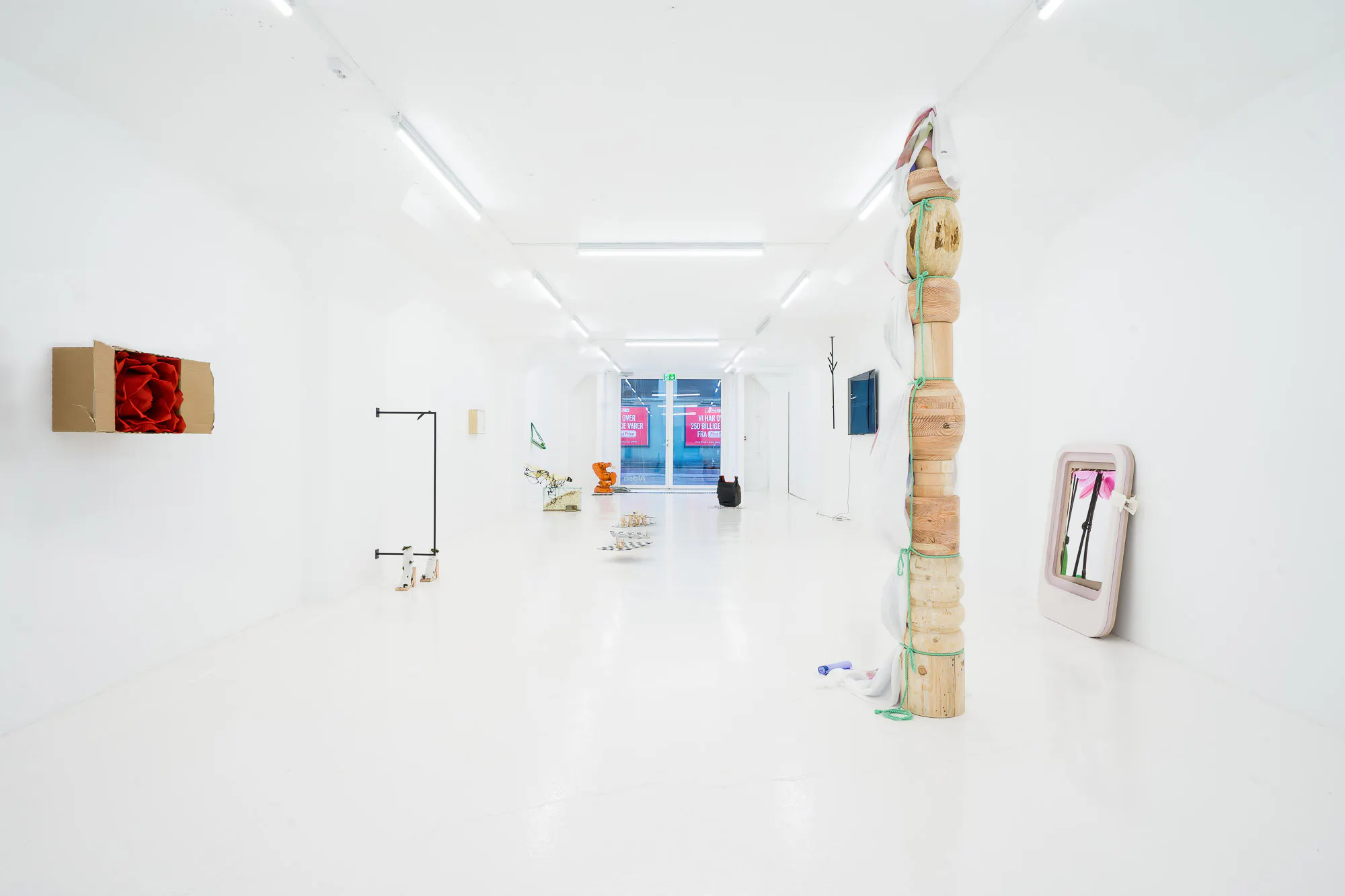
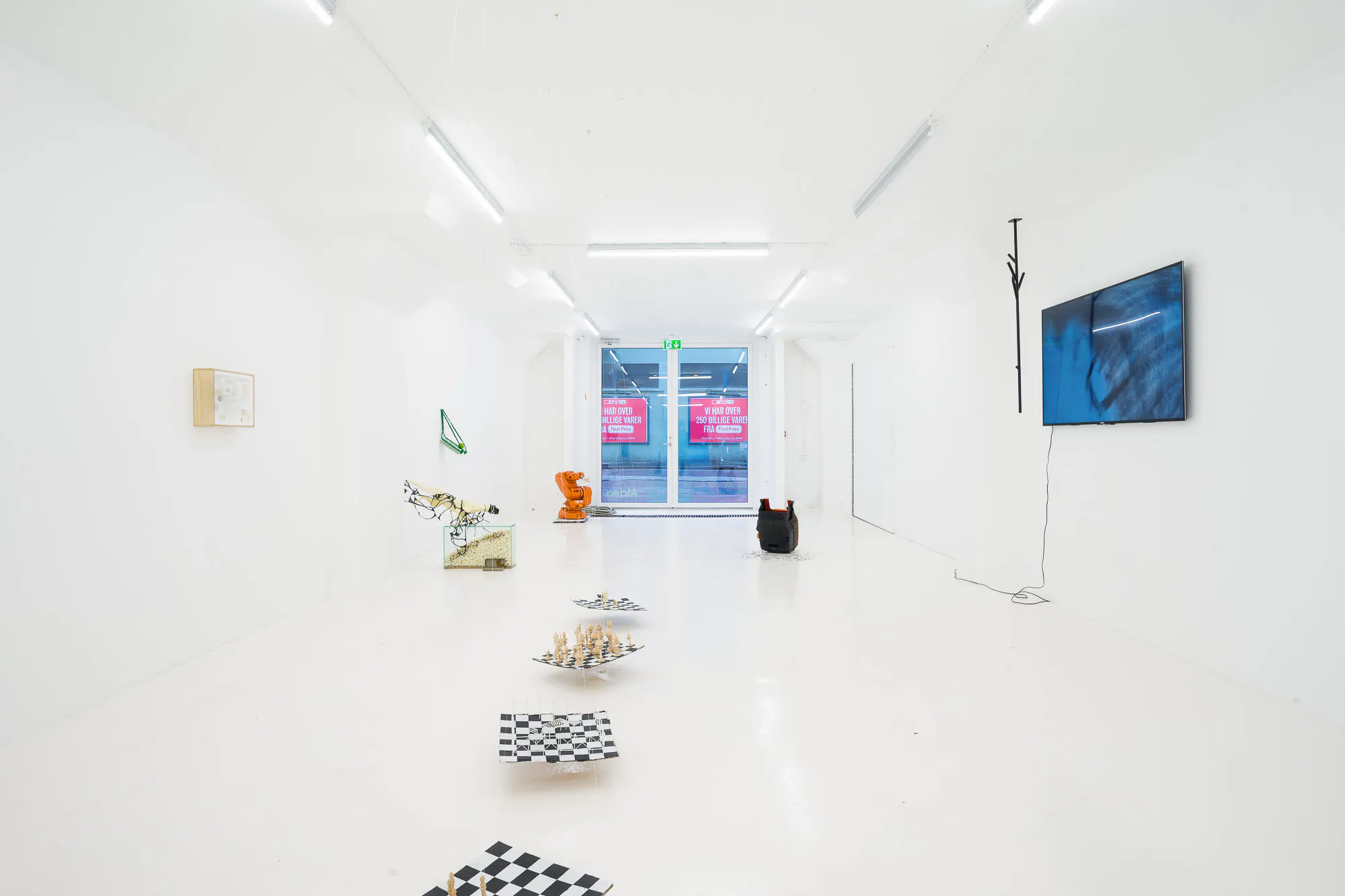
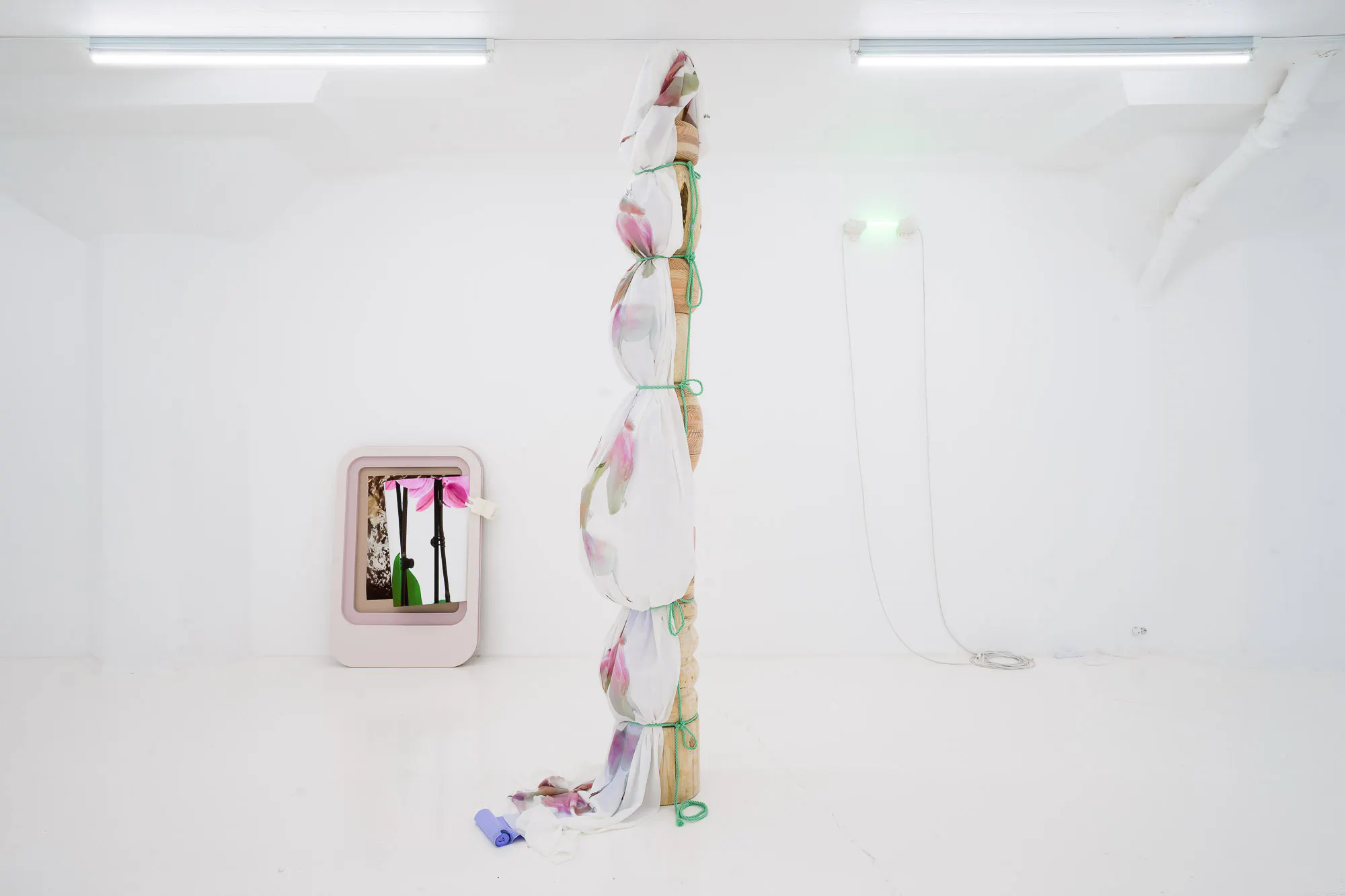
Following the crash the site was cordoned and divided into quadrants (I, II, III, & IV), a standard practice that allowed for easy mapping when analyzing events of this nature. Each resulting coordinate measured three square metres, and was combed for any associated debris that might aid the investigation. This was made more difficult by the night’s downpour, which, at this early hour, had left some areas still submerged under water. It was decided that these areas would receive further attention when the terrain had dried, and were designated by the team as Atlantis Sites, numbering 1 through 14. In the areas that were fully accessible the search proceeded outward from (0,0), which was the presumed point of impact, with remnants of the projectile’s casing being discovered as far as (-21, 17). Beyond this distance, environmental samples were the only evidence collected, though it was unclear whether these would provide any additional information about the cause of the incident.
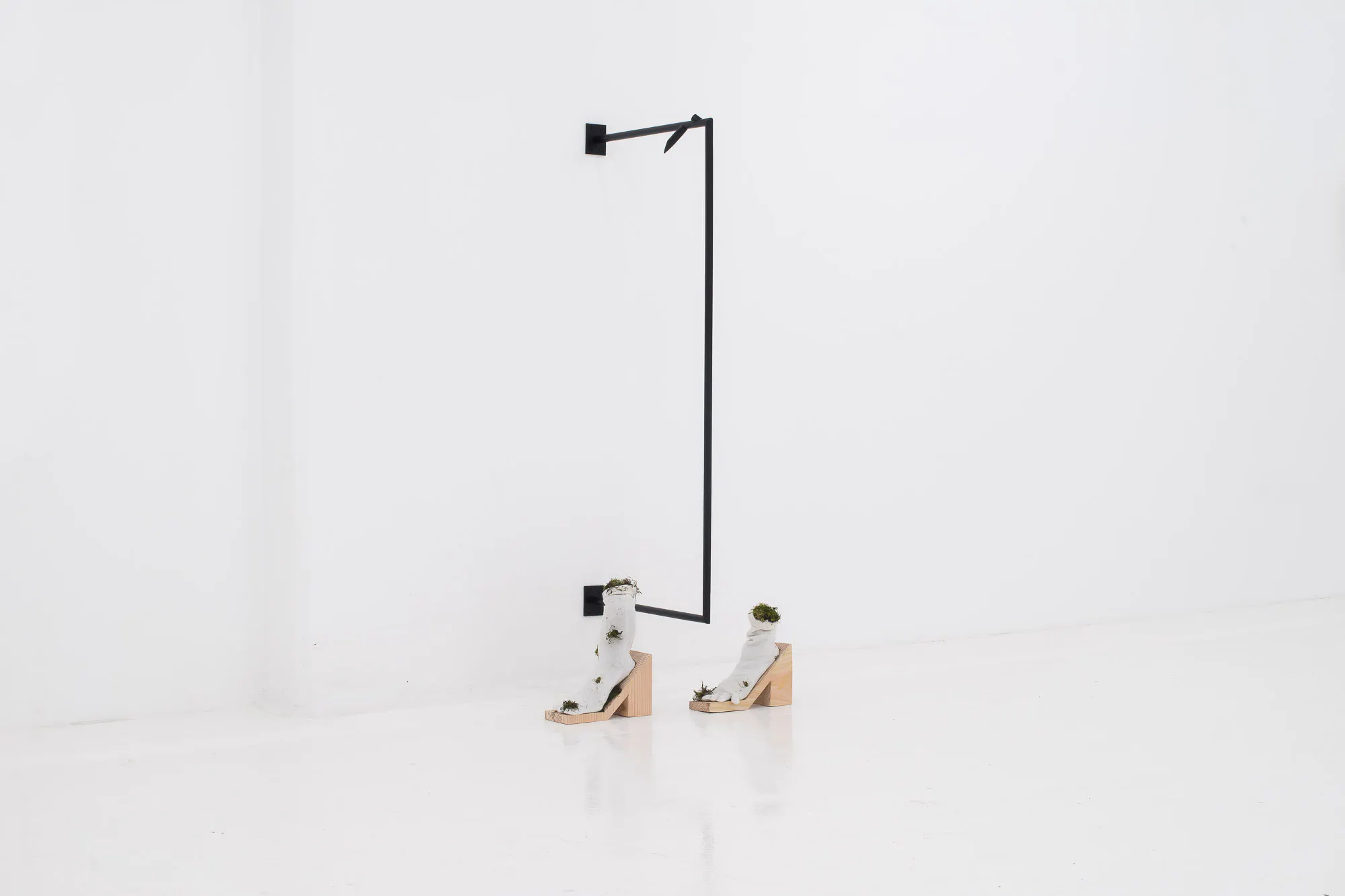
Among the fragments that were collected only one object appeared to be wholly intact, that is, only one appeared to be something, unlike the others collected that appeared to be not-something, or that were not themselves. Of course, the thing that was something became the primary subject of the investigation. It was itself, making it quite curious, but being itself it revealed little knowledge of this through study. What could be said was that its surface was rigid and smooth and its colour densely dark, so much so that at times it seemed to recede into space. It weighed precisely 6kg and was 88cm in length, and its general shape was that of a cylinder. Most curiously though, protruding from its middle was a second cylinder forming a sort of handle, which was met by another small rod that joined it at a right angle forming a second prong - this provided the appearance that it might be able to stand upright on its own. It was said that this peculiar form bore a close resemblance to the Odradek described by Kafka in the short story Die Sorge des Hausvaters, and so it was affectionately named, Odradek_1.
The crash site remained off-limits while the rain continued, an unseasonable deluge that lasted just over a week. This was not complained of much at first, as Odradek_1 was enough to study alone and based on what had been found elsewhere it was generally thought that the Atlantis Sites were unlikely to provide much additional information anyway. In truth though, despite best efforts little else was being discovered using the available methods. There was some speculation based on its shape that Odradek_1 might have a navigational purpose, but this assumed a human or similar pilot, which was arrogant, and was eventually dismissed as there was little evidence that there was any pilot at all - most also found this a rather unsettling notion as it suggested Earth as a target. As continued study revealed little else frustration began to set in, so it was a welcome relief when 12-days in, the rain let up and the sun reappeared to dry down the site.Unlike the pristine surface of Odradek_1, the fragments of casing that had already been collected were of a woven composition, though the material itself remained unknown. Perhaps this was why what was now revealed to be a very long, but very intact, “sack” of a similar - though thinner - woven composition, was previously paid little attention despite its peak already having been visible above the water line in Atlantis Site 4. Spirits were lifted by this discovery, and it was hoped that this second something, might provide some clues about the nature of the first.
When brought in for examination, the sack, which was never given another name, was first studied in isolation so that a series of material tests could be performed without further contamination. Those funding the operation were preoccupied with solving where the sack and Odradek_1 originated, but those that were directing the study acknowledged this was unlikely to be determined from the evidence available. Rather, their examination focused on determining its use, or function, or purpose. This curiosity was key in the study’s major breakthrough, which found that upon bringing the second something into close relation of the first, that the surface of Odradek_1 appeared to soften slightly. Having already studied Odradek_1 for some time there was a general ease in its presence, and since certain protocols around handling it had already been ignored, it was without much objection that upon suggestion it was decided that it would be placed inside the sack.The perfection of their fit made it immediately apparent that this was the normal condition for Odradek_1. In fact, it was clear that the studies that preceded this placement were foolish undertakings and never would have revealed any purpose for the something. The something that arrived from somewhere was now considered an exemplary object, and its difference was now also called Odradek_1. Those that called it this continued their study, while others moved on to other matters.
-
Aryen Hoekstra, 2019
Sydney Shen (b. 1989, NJ, USA) lives and works in New York. In Spring 2019 she will present her first institutional exhibition at New Museum, and her first international solo exhibition at Sophie Tappeiner in Vienna. Recent solo and two-person exhibitions include “Poor Thing” with Kyung Me at Hotel Art Pavilion, Brooklyn; “Four Thieves Vinegar” at Springsteen, Baltimore; “What’s Worse Than The Void Is Matter” at Motel, Brooklyn; and “Bone Apple Tea” at Holy Motors Project, Hong Kong. Group exhibitions include Invisible-Exports, New York; Deitch Projects, New York; Aike-Dellarco, Shanghai; Weekends, London; Fused Space, San Francisco; and American Medium, Brooklyn.
Paul Barsch is a visual artist who works with culturally charged materials across media and context and is interested in the question of how different levels of meaning interlock and create new levels of perception when different materials, objects, ideas and their inherent symbolic and practical values are recombined and how they change depending on their form of presentation. He studied fine art and painting at prof. Lutz Dammbecks class for new media at Dresden Art Academy. In 2010 he co-founded the artist-run space S T O R E contemporary in Dresden and also curates and organizes exhibitions. Together with Tilman Hornig he founded the artistic/curatorial project New Scenario in 2015; a dynamic platform for conceptual, post-cube, online exhibitions. He was on of the Initiators of PIZZA PAVILION at Venice Biennale #56 and teaches ‘basics of animation’ at Dresden Art Academy.
Katie Bethune-Leamen is a visual artist based in Toronto, Canada. Working in sculpture and installation, recent solo exhibitions include: Tom Selleck. Orchid mantis. Hats. (Gold-hatted, high-bouncing lover.) Also hats. (University of Waterloo Art Gallery, CA), Hair did. Nails did. Keep everything did. (Gustav von Aschenbach) (DNA Artspace, London, CA) Shiny, Object, Person. (Art Gallery of Ontario, Toronto, CA); group exhibitions: MOCA Tucson (USA), Thames-Side Gallery (London, UK), and Susan Hobbs Gallery (Toronto, CA); residencies: Canada Council for the Arts Paris Residency, Vermont Studio Center, and Fogo Island Arts. She recently received a Chalmers Fellowship to research sculptural abstraction through travel to archives and production centres in Italy, Germany, Japan, and the USA, and a Canada Council for Arts grant to produce new video work in Iceland.
NKD offers artists an opportunity to contemplate, concentrate and work. Presenting invited artists to inspiring living and working conditions, NKD strives to contribute to innovative artwork. The visiting artists from around the globe create an international spirit, and it is NKD’s objective to strengthen and further artistic cooperation in the Nordic area and internationally.